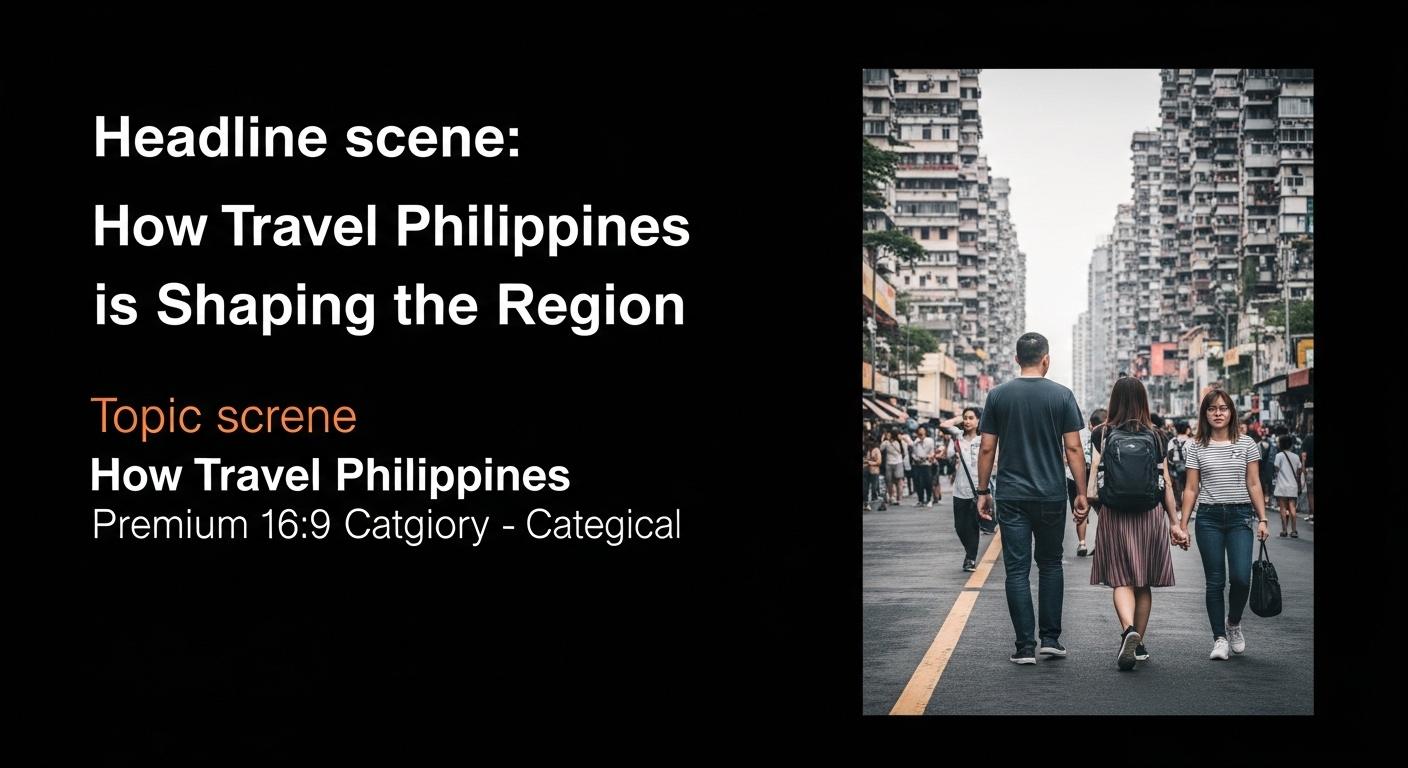
Traveler planning a Philippine itinerary amid evolving travel policies.
Updated: April 15, 2026
This piece examines how Travel Philippines is evolving in response to new advisories, airline routes, and changing traveler behavior, and what it means for Filipinos and visitors alike.
Context: The evolving travel landscape in the Philippines
In recent months, a mix of government advisories, airline strategies, and consumer expectations has reshaped how travelers plan trips across the archipelago. The conversation now runs beyond tickets and passports: it touches on data-sharing for screening, the reliability of transit hubs, and the capacity of local communities to accommodate visitors without compromising safety or quality. For the Philippines, the shift is less about a single policy than about a tapestry of rules, incentives, and habits that together determine whether a trip will be simple, complicated, or even possible for some travelers. This frame helps explain why the question isn’t only ‘where to go’ but ‘how to travel there responsibly and efficiently.’
Air connectivity and direct routes: a turning point
Direct air links, such as a potential Manila-Chicago service, can reconfigure travel flows for outbound and inbound tourism. If regulators approve a new route, airlines may shift schedules, pricing, and codeshares, with ripple effects on airport operations, visa processing, and the willingness of mid-market travelers to commit long-haul itineraries. The broader effect would not merely be more flights; it could be a signal that the Philippines is recalibrating its international connectivity to complement domestic tourism. For travelers, the practical questions become: how do I plan trips when flight options change mid-cycle? what are the longer-term implications for airfares, layovers, and travel risk? These are not hypothetical: they reflect visible moves in industry planning and government signaling.
Policy framing and regional dynamics: linking policy with experience
Policy discussions rarely sit in isolation. The way travel documents, entry requirements, and digital verification systems interact with regional security and tourism objectives matters to both business and leisure travelers. In the Philippines, the tension between safeguarding borders and sustaining a resilient tourism sector invites a pragmatic approach: streamline legitimate processes while maintaining robust screening, and invest in digital infrastructure that speeds up legitimate travel. The ripple effects extend to neighboring markets in Southeast Asia, where travelers often view the Philippines as part of a broader itinerary. For mid-market travelers, this means a balance between confidence in destination safety and the desire to keep itineraries flexible as advisories and airline schedules evolve.
Actionable Takeaways
- Check official government advisories and airline notices before planning trips, and track changes to entry requirements and transit rules that may affect your route.
- Consider options for direct or semi-direct routes where available, while evaluating total travel time, layovers, and visa policies that could impact long-haul plans.
- Build flexibility into itineraries with refundable or changeable bookings, and maintain backup plans for popular destinations during peak seasons.
- Use trusted travel planners and credible sources to assess safety, health, and visa considerations, avoiding overreliance on unverified social media posts.
- Support sustainable tourism by staying in locally managed accommodations, respecting cultural sites, and contributing to local economies without overburdening communities.
Source Context
- Travel And Tour World coverage on travel advisories and travel documents
- AeroTime: Philippine Airlines seeks approval for Manila-Chicago direct route
- AFAR: Best Beaches in the World and related travel experiences
From an editorial perspective, separate confirmed facts from early speculation and revisit assumptions as new verified information appears.
Track official statements, compare independent outlets, and focus on what is confirmed versus what remains under investigation.
For practical decisions, evaluate near-term risk, likely scenarios, and timing before reacting to fast-moving headlines.
Use source quality checks: publication reputation, named attribution, publication time, and consistency across multiple reports.
Cross-check key numbers, proper names, and dates before drawing conclusions; early reporting can shift as agencies, teams, or companies release fuller context.
When claims rely on anonymous sourcing, treat them as provisional signals and wait for corroboration from official records or multiple independent outlets.
Policy, legal, and market implications often unfold in phases; a disciplined timeline view helps avoid overreacting to one headline or social snippet.
Local audience impact should be mapped by sector, region, and household effect so readers can connect macro developments to concrete daily decisions.