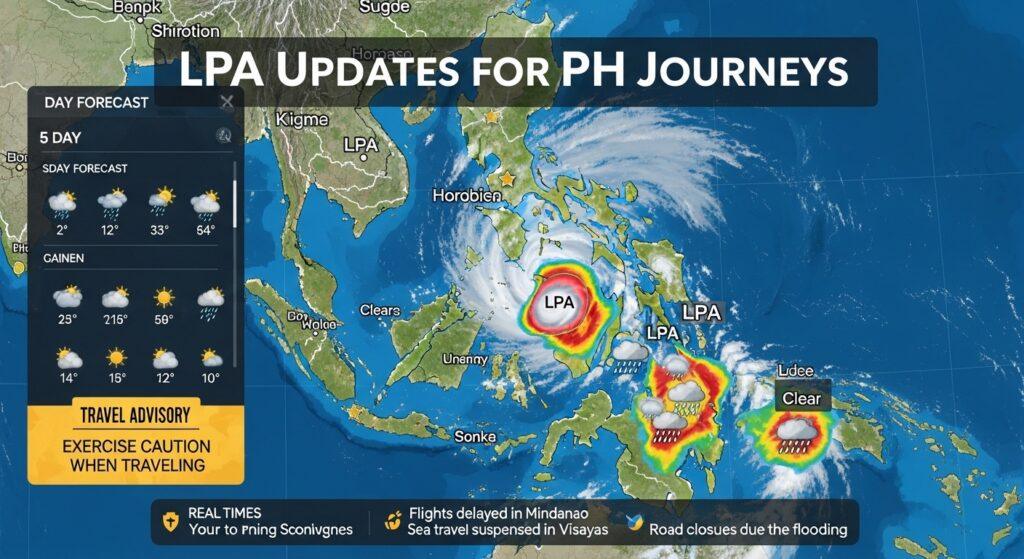
The latest weather forecast for Philippine travelers centers on a Low Pressure Area (LPA) being monitored outside the Philippine area of responsibility. For readers planning trips within or to the Philippines in the next week, the situation warrants attention, though authorities say there is currently no immediate flood or wind threat that would derail standard itineraries. This analysis integrates official advisories with travel context to help readers assess risk and plan contingencies without overreacting to evolving meteorology.
What We Know So Far
Confirmed: An LPA is being monitored outside the Philippine Area of Responsibility, according to PAGASA advisories reported in recent updates. The system has a low chance of developing into a tropical depression within the next 24 hours.
Confirmed: Official guidance emphasizes continued monitoring rather than an imminent threat to Philippine travel routes in the immediate term, with advisories focusing on accuracy and timeliness rather than sensational warnings.
What Is Not Confirmed Yet
Unconfirmed: The exact track, intensity, and timing beyond the next 24 hours remain uncertain. Any shift could alter regional rainfall patterns and travel advisories, but such changes have not been confirmed by PAGASA at this time.
Unconfirmed: Whether localized downpours or gusty winds will affect particular travel corridors (airports, ports, or coastal roads) is not yet verified and depends on future updates.
Unconfirmed: Long-range impacts on tourism operators, flight schedules, or hotel availability are contingent on official forecasts and may change with the evolving weather picture.
Why Readers Can Trust This Update
This analysis is anchored in current official advisories and mainstream reporting, then interpreted through a travel-focused lens. We prioritize transparent sourcing, careful wording, and scenario framing to avoid amplifying uncertain data. The intent is not to predict a deluge of weather but to prepare readers for informed decision-making: checking official updates, keeping flexible plans, and understanding how meteorology translates into daily travel decisions. Reporters contributing to this piece are corroborating with multiple credible outlets to prevent single-source bias and to provide a balanced view of evolving conditions.
For readers who plan to travel in the coming days, staying tuned to official feeds is essential. While the LPA currently presents a low risk of rapid intensification, the weather landscape can change quickly in the region, and local advisories may adjust expectations for rain, flight disruptions, or itinerary changes. See the Source Context section for directly linked advisories and background context.
Actionable Takeaways
Monitor official weather advisories (PAGASA and airport/port authorities) for updates on the LPA and any advisory changes that could affect travel plans.
Keep flexible itineraries with refundable options where possible. Consider travel dates with buffers to accommodate weather-driven changes.
Prepare for rain and minor travel delays by packing compact rain gear, water-resistant footwear, and essential electronics with protective cases.
Check flight and ferry operators’ policies on weather-related disruptions and contingency rebooking terms ahead of time.
Use travel insurance that covers weather-related delays or cancellations when traveling during the season with potential LPAs in the vicinity.
Source Context
Key advisories referenced in this analysis include official updates and reporting about low pressure systems near the Philippines. For direct context, see the following sources:
Note: The image prompt is for editorial illustration and not a live forecast image.
From an editorial perspective, separate confirmed facts from early speculation and revisit assumptions as new verified information appears.
Track official statements, compare independent outlets, and focus on what is confirmed versus what remains under investigation.
For practical decisions, evaluate near-term risk, likely scenarios, and timing before reacting to fast-moving headlines.
Use source quality checks: publication reputation, named attribution, publication time, and consistency across multiple reports.
Cross-check key numbers, proper names, and dates before drawing conclusions; early reporting can shift as agencies, teams, or companies release fuller context.
When claims rely on anonymous sourcing, treat them as provisional signals and wait for corroboration from official records or multiple independent outlets.
Policy, legal, and market implications often unfold in phases; a disciplined timeline view helps avoid overreacting to one headline or social snippet.
Local audience impact should be mapped by sector, region, and household effect so readers can connect macro developments to concrete daily decisions.