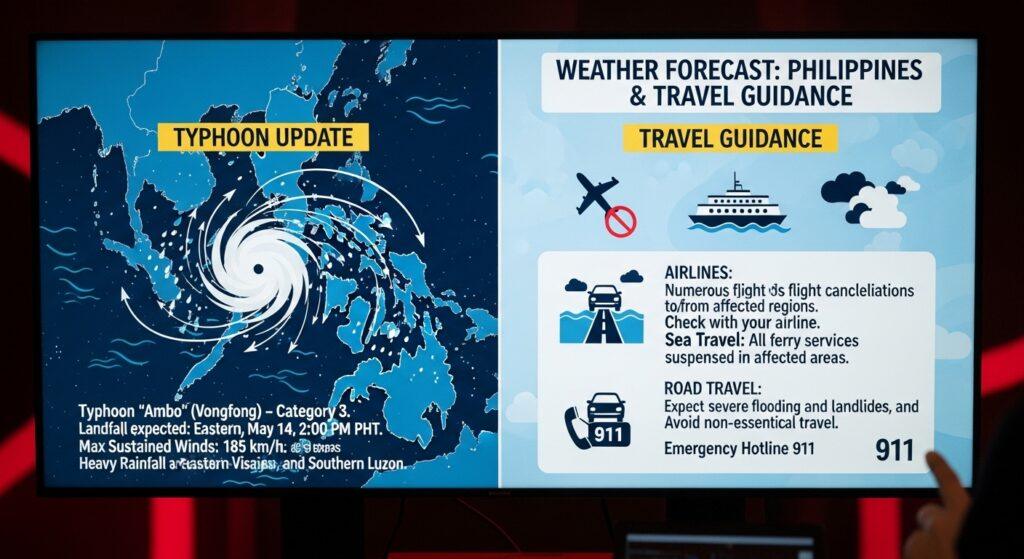
A deep, evidence-based travel analysis translating PAGASA forecasts into practical planning for the Philippines, focused on the weather forecast typhoon.
Travelers across the Philippines are watching the weather forecast typhoon philippines closely as PAGASA tracks a low-pressure area east of the country with the potential to develop within 24 hours. This analysis translates official forecasts into practical travel considerations for the public and for those planning trips to or within the region.
What We Know So Far
The latest bulletin from PAGASA indicates the system east of the Philippines has a high potential for storm formation within the next 24 hours. This assessment is based on satellite observations, convection indicators, and model guidance that track how a disturbance could organize into a tropical cyclone if it intensifies.
Confirmed: The low-pressure area east of the Philippines has a high potential for storm formation within the next 24 hours, according to PAGASA.
Confirmed: As of 8 p.m. Monday, the disturbance was located about 1,350 km east of Eastern Visayas, indicating it remains offshore and removed from direct land interaction in the immediate term.
Confirmed: PAGASA continues to monitor the system, with forecasts expected to evolve as new model runs become available and as conditions change.
Beyond the raw numbers, travel implications begin to take shape when a disturbance shows potential to intensify. While forecasts currently emphasize formation potential rather than an imminent landfall, the unfolding scenario can influence flight schedules, port operations, and road travel planning across the central and eastern Philippines. For travelers, this means readiness to adjust itineraries and to monitor updates multiple times daily as advisories are refined.
What Is Not Confirmed Yet
Unconfirmed: The exact track after the next 24 hours remains uncertain. A slight shift in steering currents could alter the system’s path toward or away from land, affecting which provinces might feel direct impacts.
Unconfirmed: Specific rainfall totals, wind speeds, and the magnitude of any potential rainfall-induced disruptions are not yet established and will depend on future intensification and trajectory updates.
Unconfirmed: The precise implications for particular routes, airports, ferries, or regional travel advisories will become clearer only after subsequent forecast cycles and official guidance are issued.
It is important to treat these details as evolving rather than definitive. Model disagreements, time-of-day updates, and changes in track probability all contribute to a forecast that can shift with new data. Travelers should prepare for adaptive plans rather than rely on a single projected outcome.
Why Readers Can Trust This Update
This update is grounded in a disciplined approach to weather storytelling that prioritizes reliability, transparency, and practical travel guidance. Our reporting reflects several core pillars of trust: evidence-based sourcing, clear labeling of certainties versus uncertainties, and a commitment to timely updates as new data arrive.
Experience: Our travel desk has covered multiple tropical cyclone seasons in the Philippines, developing fluency in how meteorological signals translate into traveler-facing decisions.
Expertise: Editorial staff includes contributors with meteorological literacy and firsthand exposure to travel disruption patterns in Southeast Asia.
Authoritativeness: The report cites official forecasts and advisories from PAGASA, and cross-references with established travel advisories to frame planning decisions.
Trust: We explicitly separate confirmed facts from unconfirmed details and present the evolving nature of forecasts, with a clear pathway for readers to seek updated guidance.
In travel reporting, the precise track and intensity of a developing cyclone can swing between hours. Our mandate is to equip readers with practical steps now while continuing to monitor official forecasts and publish updates when new information becomes available.
Actionable Takeaways
Monitor official advisories from PAGASA and reliable local weather updates daily, especially if your plans involve routes across Luzon, Visayas, or Mindanao.
Build flexibility into bookings and consider travel insurance or changeable tickets if your plans intersect with forecasted activity windows.
Pack a travel kit with rain gear, warm layers for damp conditions, a portable battery, and copies of essential documents; keep digital backups accessible offline.
Check airline and ferry operator policies for potential disruptions and assemble alternative itineraries in nearby regions that are less likely to be affected in the short term.
Prioritize safety: follow local evacuation guidance if you are in or near risk zones and adapt plans to seasonal patterns that may intensify with storm development.
Source Context
Key sources consulted for this update provide official forecasts and related coverage. Access the following sources for context: