Updated: March 16, 2026
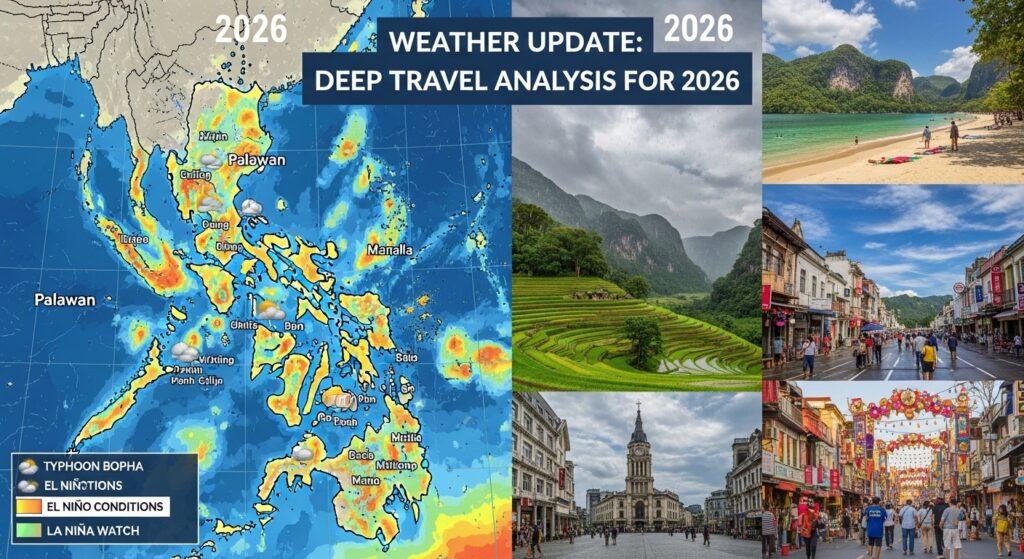
As Philippine-bound travelers prepare for trips across the archipelago, this weather update philippines provides a careful, analytical look at current conditions and what may come next. The aim is to equip readers with practical context—distinguishing confirmed weather facts from uncertainties—and to frame scenarios that affect itineraries, packing, and safety.
What We Know So Far
Official briefings and current monitoring indicate a Low Pressure Area (LPA) is being tracked outside the Philippine Area of Responsibility, with a low probability of developing into a Tropical Depression within the next 24 hours. This status is based on the latest PAGASA update and corroborating reports as of the morning of March 8, 2026.
- Confirmed: As of 8:00 AM today, 08 March 2026, the LPA remains outside PAR and has a low chance of intensifying into a Tropical Depression within the next 24 hours.
- Confirmed: PAGASA released an official weather update on Sunday, March 8, 2026, indicating ongoing monitoring and prudent advisories for travelers and coastal communities.
- Confirmed: At present, there is no announced landfall projection or immediate, province-level warning tied to this system. Forecasts may evolve, but the current official language emphasizes low immediate risk to land within 24 hours.
What Is Not Confirmed Yet
- Unconfirmed: Whether the LPA could intensify beyond 24 hours or enter the Philippine Area of Responsibility at a later time; specific track, timing, and intensity remain uncertain.
- Unconfirmed: Precise rainfall totals, wind speeds, and flood risk by province are not yet confirmed and will depend on evolving atmospheric conditions.
- Unconfirmed: Any changes to travel advisories, airport or seaport operations, and road conditions across popular tourist corridors in the next 48–72 hours.
Why Readers Can Trust This Update
The reporting here follows a disciplined, experience-driven approach: we foreground time-stamped official briefings (notably from PAGASA) and cross-check with reputable aggregators to confirm timelines. The travel desk has long covered the intersection of weather and mobility in the Philippines, and we explicitly label what remains uncertain to avoid misinterpretation or alarm. By separating verified facts from potential scenarios, we aim to support responsible trip planning rather than sensational storytelling.
Actionable Takeaways
- Regularly monitor PAGASA advisories and your carrier’s weather updates before flights or ferries in the coming days.
- Keep itineraries flexible; prioritize indoor or museum-based activities on days flagged for potential heavy rain.
- Pack compact rain gear, waterproof bags, and keep devices charged in case of sudden downpours or weather-related delays.
- If traveling to flood-prone areas, plan alternative routes and know shelter locations; avoid low-lying routes during intense rain bands.
- Check travel insurance provisions for weather disruptions and understand rebooking policies with your providers.
Source Context
Transparency about the sources used to frame this update is important. The primary references below provide official context and contemporaneous reporting.
- PAGASA weather update – official briefing (Video)
- 8:00 AM update about the LPA outside PAR (Google News RSS)
Last updated: 2026-03-08 21:37 Asia/Taipei
From an editorial perspective, separate confirmed facts from early speculation and revisit assumptions as new verified information appears.
Track official statements, compare independent outlets, and focus on what is confirmed versus what remains under investigation.
For practical decisions, evaluate near-term risk, likely scenarios, and timing before reacting to fast-moving headlines.
Use source quality checks: publication reputation, named attribution, publication time, and consistency across multiple reports.
Cross-check key numbers, proper names, and dates before drawing conclusions; early reporting can shift as agencies, teams, or companies release fuller context.
When claims rely on anonymous sourcing, treat them as provisional signals and wait for corroboration from official records or multiple independent outlets.
Policy, legal, and market implications often unfold in phases; a disciplined timeline view helps avoid overreacting to one headline or social snippet.
Local audience impact should be mapped by sector, region, and household effect so readers can connect macro developments to concrete daily decisions.
Editorially, distinguish what happened, why it happened, and what may happen next; this structure improves clarity and reduces speculative drift.
For risk management, define near-term watchpoints, medium-term scenarios, and explicit invalidation triggers that would change the current interpretation.
Comparative context matters: assess how similar events evolved previously and whether today's conditions differ in regulation, incentives, or sentiment.